Entry 7 - Sketching and Prototyping
- May 10
- 2 min read
One of the things I found most clarifying about the sketching phase of the design project was how it allowed us to differentiate between good ideas and ideas that were feasible.
Here was one of my strongest contributions to the project. Another group member had proposed the idea of having a garden companion, similar to a Tamagotchi, for the garden. Instead of the creature responding to the actions of the owner, it would respond to the garden sensor data. The child would act as both the carer of the companion and the observer of the garden activity through the companion, adding an educational aspect.
I then thought about adding the digital twin concept with the companion being a digital twin of the garden. With the companions growth and evolution matching the growth and evolution of the garden. I brought this to the group as a sketch showing the creature and how it interacts with the garden and the child who owns it. Initial reaction was mixed. One group member felt the digital twin framing was too abstract to explain. That pushed me to think about how the concept could work experientially making the underlying logic of the digital twin concept easier to explain. The creature just needs to live and grow in a way that's clearly connected to the garden.
The idea of four companions came from wanting to honour sensor diversity: the worm was tied to soil moisture, the bat to acoustic data, the toad to temperature and the Moringa plant, chosen in reference to the NHM's Plants, People and Their Stories project, connected to the garden's community aspect and soil moisture also.
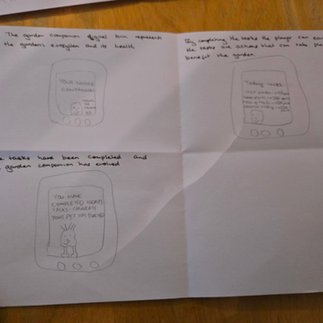
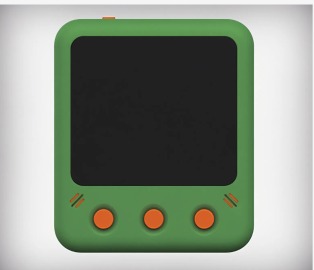
I sketched the initial device by hand in portrait with three buttons and a screen above, similar to a tamagotchi. That sketch became the starting point for the group's Figma work, where we prototyped the UI and worked through how a 7-year-old navigates between the companion view, task list, and reward content. Below you can see the journey of the device from the sketch to the tamagotchi like initial design to the final prototype developed by my group mate. The idea of a rented device rather than one owned also surfaced here as a key constraint as the creature had to evolve with garden data, not the individual player data. This was a small but significant design decision to alleviate attachment and privacy concerns that would inevitably be had when designing for children.



Comments